
WiFi 6 vs. Ethernet: Choosing the Right Foundation for Your Business
In the Greater Chicago Area / Chicagoland, businesses are increasingly faced with a fundamental infrastructure decision: should they lean into the convenience of modern wireless or stick with the proven stability of a hardwired backbone? Understanding the practical trade-offs between WiFi 6 and traditional Ethernet is essential for maintaining operational uptime and security.
Wireless Convenience vs. Hardwired Stability
WiFi 6 (802.11ax) has bridged the performance gap significantly, offering higher data rates and better handling of high-density environments. It provides the mobility that modern workforces demand, allowing laptops, tablets, and mobile devices to stay connected seamlessly as employees move between conference rooms and common areas.
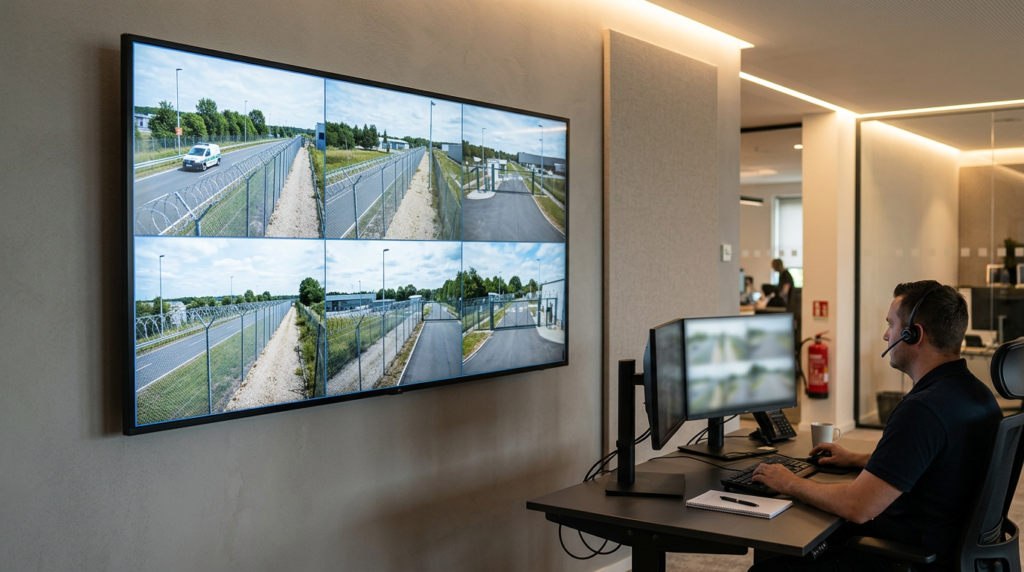
However, Ethernet remains the gold standard for stability. Hardwired connections are not susceptible to the signal interference or physical obstructions that can plague wireless networks. For high-bandwidth tasks—such as 4K video surveillance streaming or large database transfers—the consistent, dedicated throughput of a Cat6 or Cat6A cable provides a level of reliability that wireless simply cannot guarantee.

Security and Latency Considerations
From a security perspective, a physical cable is inherently more secure than a radio signal. While WiFi 6 utilizes advanced encryption like WPA3, a hardwired network significantly reduces the “attack surface” by requiring physical access to the building’s infrastructure to intercept traffic.
Latency is another critical factor. Ethernet typically offers lower and more consistent latency (ping), which is vital for real-time applications like VoIP (Voice over IP) and video conferencing. In a busy office, the “contention” for airwaves on a wireless network can lead to jitter and dropped packets, issues that are virtually non-existent on a properly installed structured cabling system.
Designing a Hybrid Infrastructure
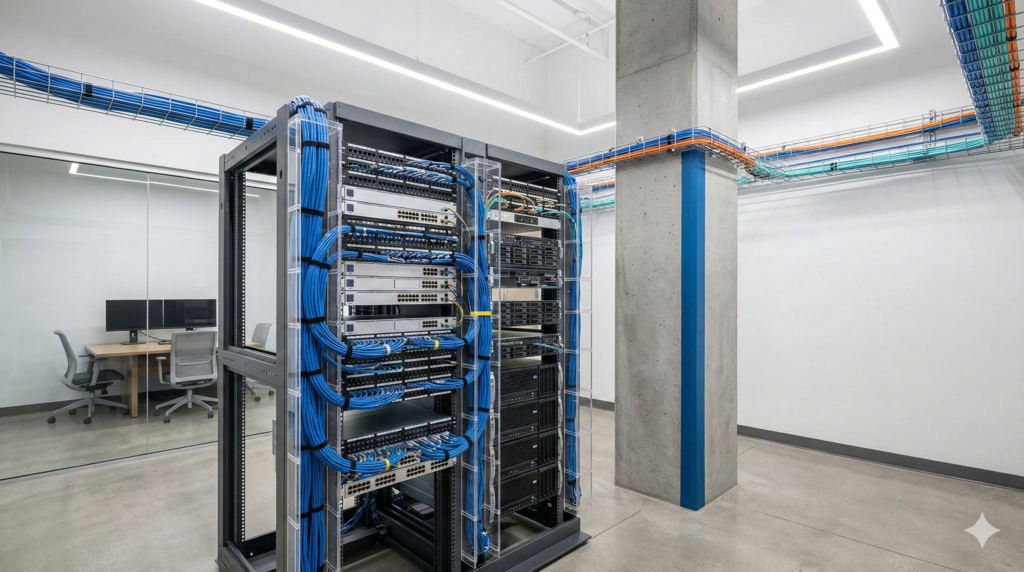
Most successful commercial deployments today utilize a hybrid approach. This strategy involves building a robust hardwired backbone for stationary assets—such as desktop workstations, network printers, and security cameras—while deploying a mesh of high-performance access points to provide blanket wireless coverage for mobile users.
This dual-layer design ensures that the most critical business functions have a dedicated, interference-free path, while still providing the flexibility needed for a collaborative modern office. It also allows for easier troubleshooting, as the network can be segmented and managed more effectively.
Installation and Certification
The effectiveness of any network foundation relies on the quality of the installation. Professional structured cabling follows strict BICSI standards, ensuring that cables are not over-stretched, bend radii are respected, and EMI (electromagnetic interference) from power lines is avoided.
Every hardwired drop should be labeled at both ends and certified using professional testing equipment to verify that it meets its rated speed (e.g., 1 Gbps or 10 Gbps). This documentation provides property managers with a clear “as-built” map of their infrastructure, making future expansions or troubleshooting much more efficient.
Next Steps
Meridian Alarm provides comprehensive infrastructure audits and pre-wire planning to ensure your facility is built for growth. To prepare for a network review, please have your current reflected ceiling plans, rack locations, and ISP handoff details available.
Service Area: Cook, DuPage, Kane, Kendall, Lake, McHenry, Will