Future-Proofing Your Network: The Importance of Quality Structured Cabling
For businesses in the Greater Chicago Area / Chicagoland, maintaining a reliable digital operation requires more than just high-end software and fast computers. The physical foundation of the network—the structured cabling—determines the true speed, stability, and scalability of the entire system. Selecting the right grade of cable is critical for avoiding bottlenecks as bandwidth demands increase.
Evaluating Cable Grades for High-Speed Connectivity
The choice between different categories of copper cabling has a direct impact on operational capacity. Category 6 (Cat6) is a common standard that provides excellent performance for standard office tasks and gigabit networking. However, as facilities deploy more bandwidth-intensive applications like 4K video monitoring and cloud-based platforms, Category 6A (Cat6A) is becoming the preferred foundation.
Cat6A supports 10-Gigabit data rates and features enhanced shielding that significantly reduces crosstalk. Additionally, its thicker copper gauge provides superior heat dissipation. This is particularly important for modern Power over Ethernet (PoE) applications, ensuring that devices like wireless access points and security cameras receive stable power without degrading the data signal.
Planning for Capacity and Expansion
A professional cabling deployment requires strategic capacity planning to support both current operations and future growth. This involves calculating PoE budgets to guarantee that the network switches can power an expanding roster of smart building devices.
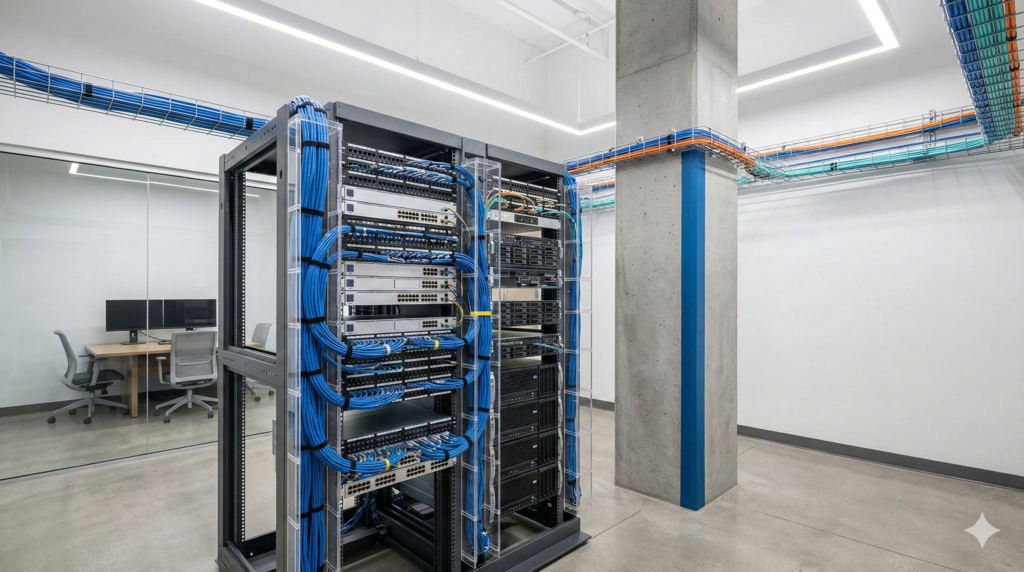
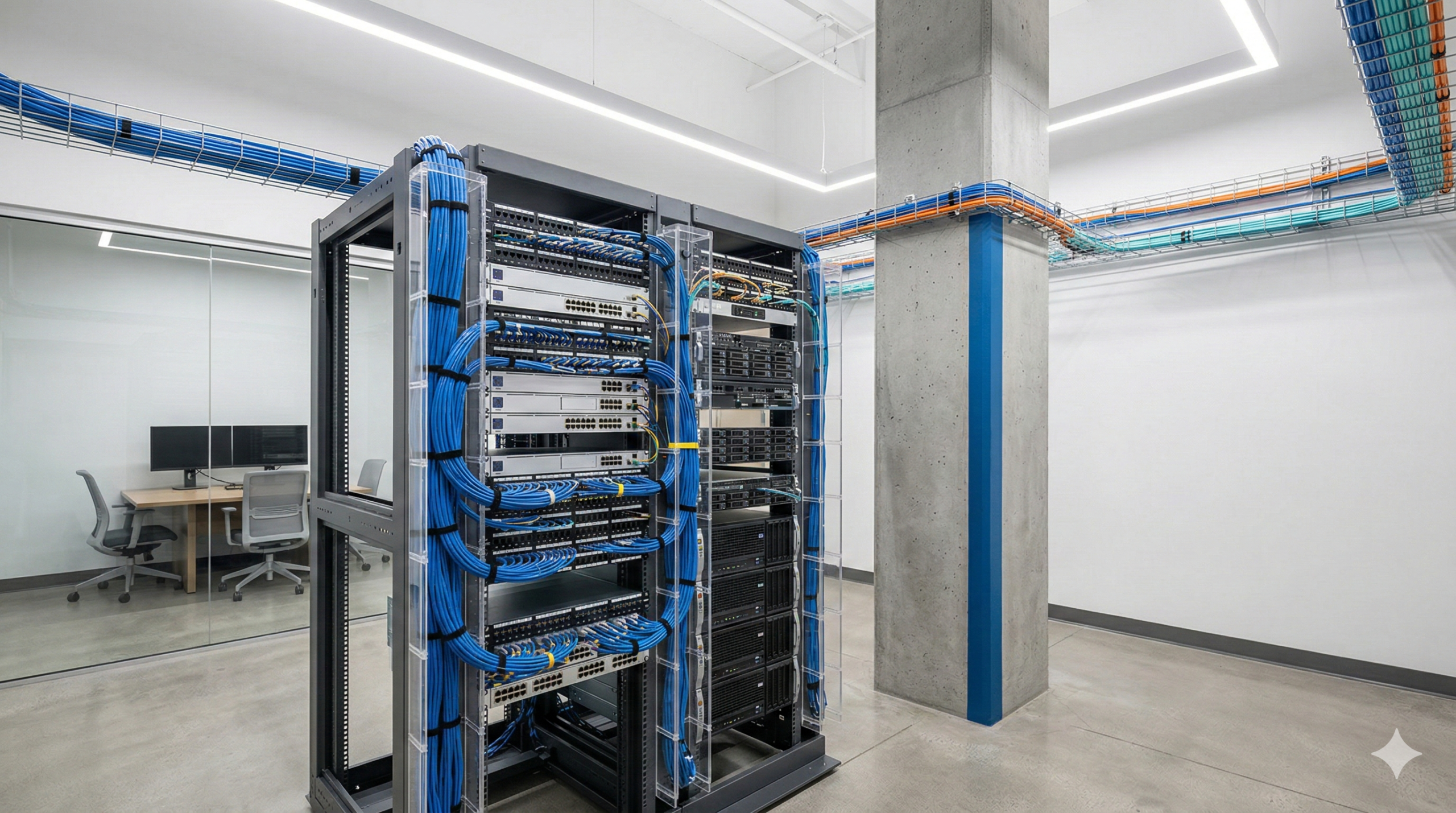
Infrastructure pathways must be designed to accommodate future scaling. Utilizing properly sized conduit, cable trays, and J-hooks ensures that new cable runs can be added without disrupting the existing network. Comprehensive labeling is also essential; every drop must be clearly identified at both the workstation and the patch panel to streamline future moves, adds, and changes.
Installation Discipline and Compliance
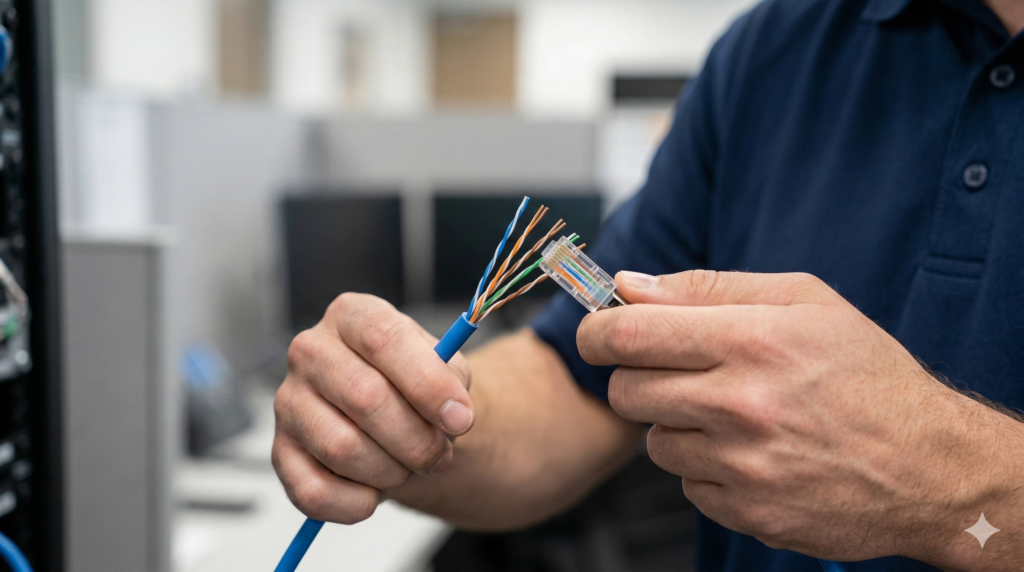
The performance of high-speed data infrastructure is highly sensitive to installation quality. Professional integrators follow strict BICSI standards to maintain signal integrity throughout the facility. This discipline includes respecting the maximum bend radius of the cable and avoiding excessive pulling tension, which can cause microscopic damage to the copper pairs.
Environmental routing is equally critical. Data pathways must be kept separate from high-voltage electrical lines and fluorescent lighting ballasts to prevent electromagnetic interference (EMI). Maintaining this separation prevents signal degradation and ensures a stable, reliable connection for mission-critical operations.
Certification and System Turnover
The final phase of a structured cabling project is formal system certification. Professional certification goes beyond basic continuity testing by using advanced equipment to verify the electrical characteristics of every single link against industry standards. This guarantees that the installed infrastructure truly supports the speeds it was designed to handle.
Upon completion, property managers should receive a comprehensive turnover package. This includes “as-built” drawings that map out all cable routes and a detailed schedule of the certified drops. This documentation provides a clear, reliable baseline for long-term facility management and any subsequent technology upgrades.
Next Steps
Meridian Alarm provides comprehensive pre-wire planning reviews and written infrastructure plans to ensure your facility is built for modern demands. To prepare for a network consultation, please have your reflected ceiling plan, desired rack locations, and ISP handoff details available for our team.
Service Area: Cook, DuPage, Kane, Kendall, Lake, McHenry, Will