Fire Pump Basics: What Facility Managers Need to Know
For large commercial facilities in the Greater Chicago Area / Chicagoland, maintaining reliable water-based fire protection is a critical operational responsibility. When a building’s municipal water supply cannot provide adequate pressure to meet the demands of its suppression system, a fire pump serves as the essential mechanical backbone, ensuring that sprinklers and standpipes perform as designed during an emergency.
Understanding the Core Components
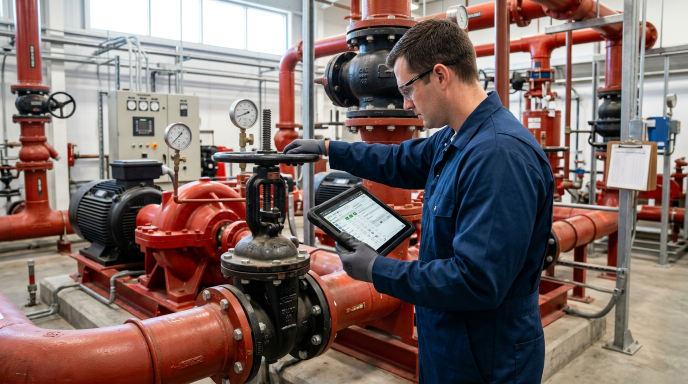
Fire pumps are typically required in high-rise buildings, expansive warehouses, or facilities where the standard municipal water pressure falls short. These systems consist of three primary components that work in unison. The pump itself is responsible for moving the water, while the driver provides the necessary power. This driver can be either an electric motor, which is common and requires less routine maintenance, or a diesel engine, which provides critical redundancy during a power outage. Finally, the controller monitors the system’s pressure and automatically activates the pump when a drop is detected.
How the System Responds
The activation of a fire pump is entirely automatic and triggered by the environment. When heat from a fire causes a sprinkler head to activate, the immediate release of water causes the overall system pressure to drop. The controller detects this pressure loss almost instantly and signals the driver to start the pump. This process restores and maintains the high-pressure water flow required to effectively suppress or control the fire until first responders arrive on the scene.
The Importance of Routine Testing
Because fire pumps are complex and powerful pieces of life-safety equipment, they require a strict regimen of professional inspection and testing to ensure ongoing reliability. Routine weekly or monthly tests are necessary to verify that the system maintains adequate pressure and that the automatic start functions are operational.
Annual flow testing is also required to confirm that the pump performs according to its original design standards. For facilities utilizing diesel-driven systems, yearly engine maintenance is an additional, critical requirement. Consistent professional inspections not only ensure that your building remains compliant with stringent local and national fire codes but also provide the peace of mind that your life-safety infrastructure will function flawlessly when it matters most.
Next Steps
Meridian Alarm provides comprehensive life-safety system audits and professional maintenance plans to keep your facility protected and compliant. To prepare for an inspection or service consultation, please have your current system design documents, previous flow test results, and any recent compliance notices available for review.
Service Area: Cook, DuPage, Kane, Kendall, Lake, McHenry, Will