Physical Access Control: Defining the Boundary Between Logical and Physical Security
In the Greater Chicago Area / Chicagoland, the distinction between digital and physical security is rapidly dissolving. For office property managers and facility directors, physical access control is no longer just about locks and keys; it is a critical component of a broader security posture that protects both tangible assets and sensitive data.
The Convergence of Security Layers
Modern access control serves as the physical manifestation of logical security principles. Just as a firewall manages digital traffic, a robust door security system manages the movement of people. By utilizing encrypted credentials and centralized management software, facilities can implement a “zero-trust” approach to their physical perimeter.
This convergence means that a security breach is rarely isolated. A compromised key card or a propped door can lead to unauthorized access to server rooms or executive suites, highlighting the need for a unified strategy. Integrating these systems ensures that every entry and exit event is logged, providing a verifiable audit trail for compliance and liability protection.
Core Specifications
| Feature | Legacy Proximity (125kHz) | Encrypted Smart Technology |
| Security Level | Low; vulnerable to cloning | High; advanced cryptographic handshakes |
| Credential Type | Basic fobs and clamshell cards | Secure smart cards and mobile IDs |
| Data Integrity | Simple ID broadcast | Multi-layered data protection |
| Scalability | Limited integration options | Built for VMS and HR platform integration |
Where Modern Hardware Makes the Difference
The transition to high-security credentials, such as MIFARE DESFire or HID iCLASS, is the most effective way to harden a facility. These systems eliminate the risk of unauthorized fob duplication, which is a common vulnerability in older 125kHz legacy systems.
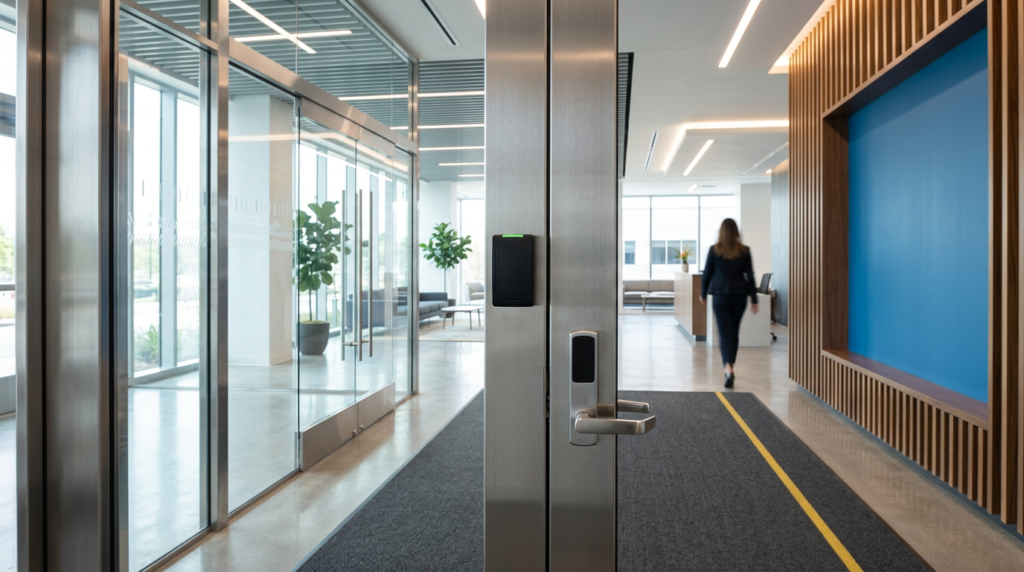
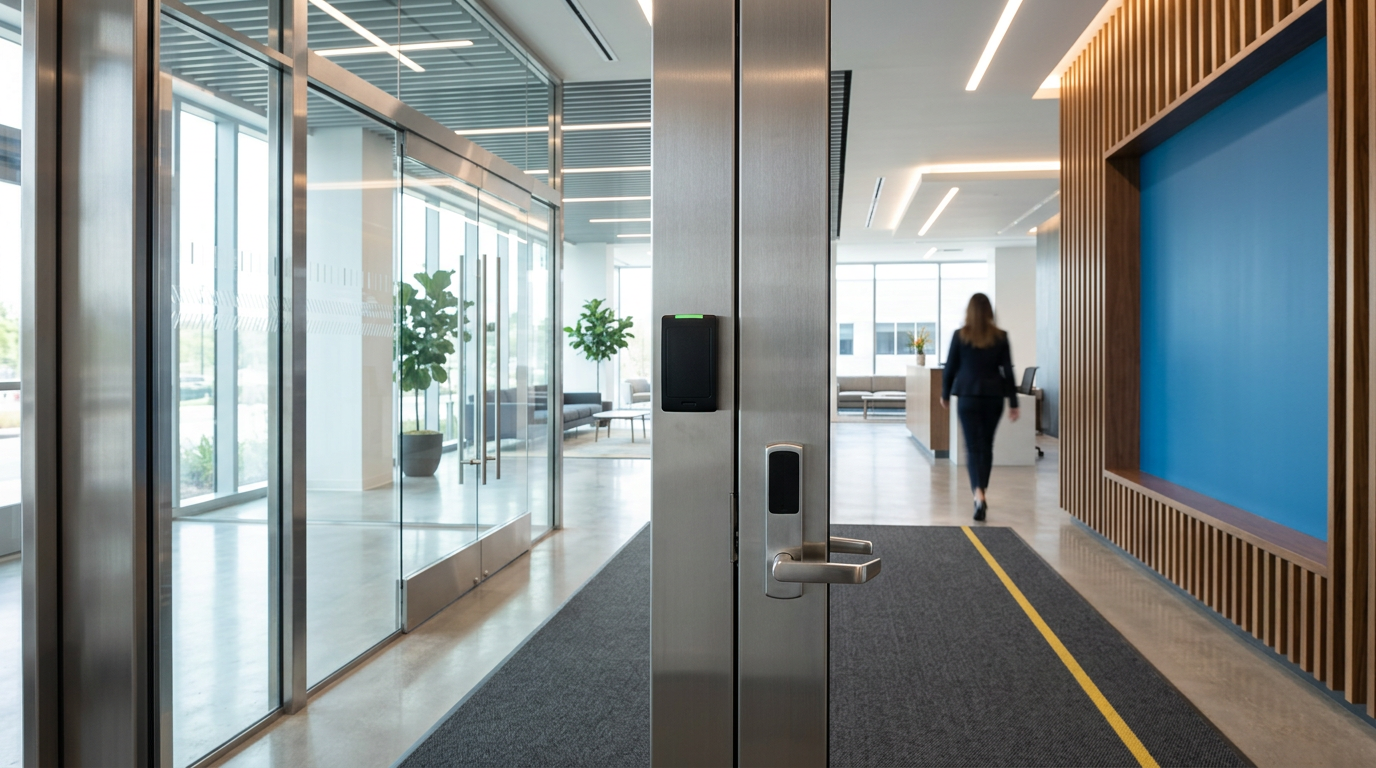
Beyond the readers, the physical locking hardware must be selected based on the specific requirements of each opening. Electromagnetic locks provide high holding force for glass storefronts, while electrified strikes are often preferred for standard office doors to maintain mechanical egress options. Each component must be integrated with the building’s fire alarm system to ensure safe evacuation during an emergency.
Implementation and Management
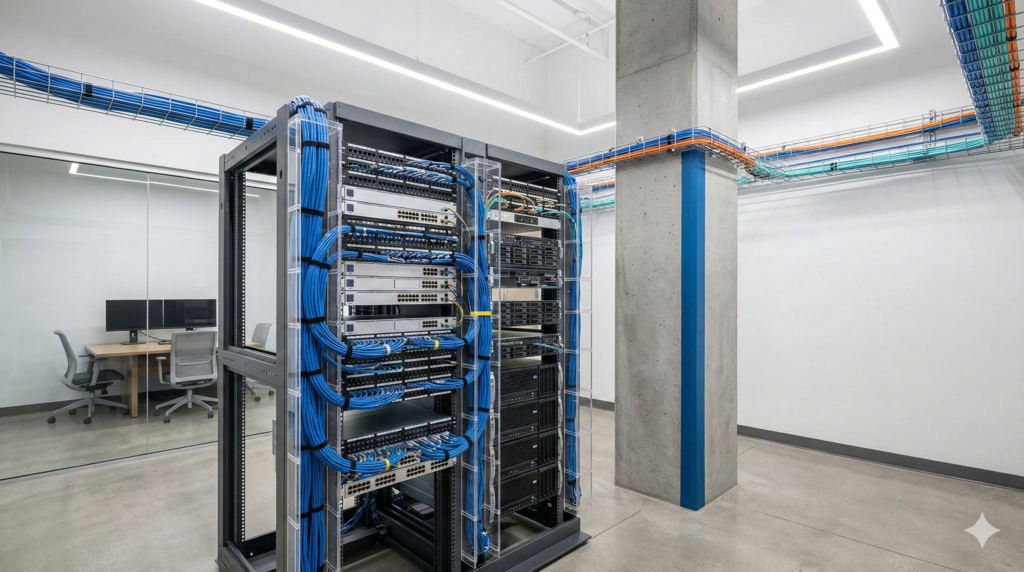
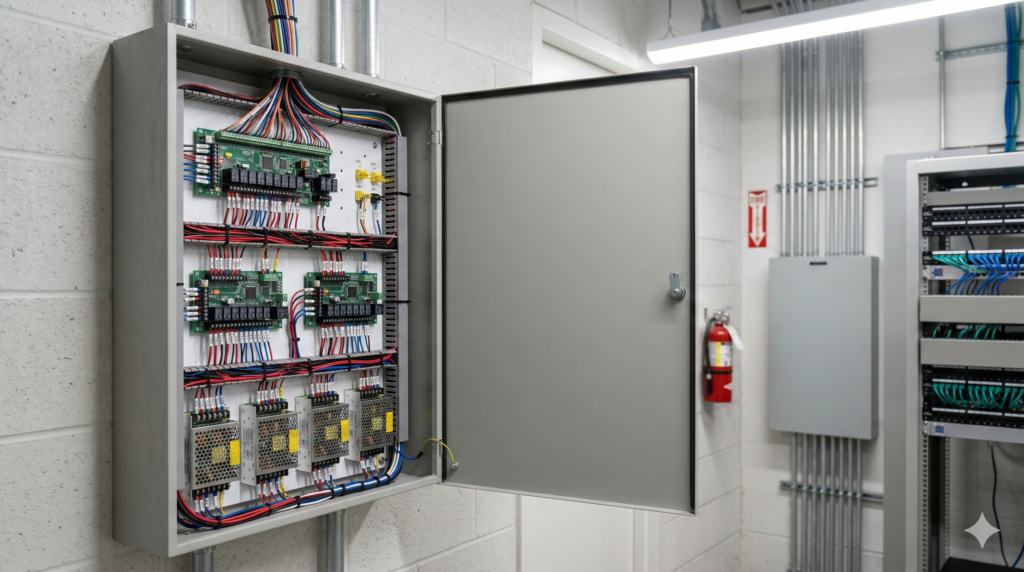
A successful access control deployment relies on the quality of the underlying infrastructure. Professional structured cabling ensures that power and data reach every door without interference. Utilizing dedicated pathways and maintaining proper labeling in the equipment room simplifies long-term maintenance and future system expansions.
Ongoing management is equally important. This includes regular audits of user permissions, immediate deactivation of lost credentials, and physical inspections of door hardware. By treating access control as a living system rather than a one-time installation, property owners can ensure their facility remains secure against evolving threats.
Next Steps
Meridian Alarm provides comprehensive security walks and prioritized system migration plans to help you transition to a secure credential platform. To prepare for a review, please have your current user list, a sample of your current key fob, and a site map of all secure entry points available for our team.
Service Area: Cook, DuPage, Kane, Kendall, Lake, McHenry, Will