
Protecting Your Assets and Bottom Line: A Strategic Approach to Fire Safety
For business owners in the Greater Chicago Area / Chicagoland, fire protection is more than a regulatory hurdle—it is a critical strategy for asset preservation and financial stability. A proactive approach to life-safety systems ensures that your facility remains compliant with NFPA 72 standards while simultaneously reducing the risk of costly operational downtime.
Proactive Maintenance as a Financial Strategy
The most significant financial drain in fire protection often comes from reactive repairs and emergency service calls. Systems that are neglected frequently experience component failures at the most inconvenient times, leading to expensive “after-hours” labor rates and potential fines from local authorities having jurisdiction (AHJ).
By contrast, a structured program of annual inspections and preventative maintenance allows property managers to identify aging components before they fail. This enables predictable budgeting and ensures that the system remains fully operational, protecting the building’s insurance standing and reducing the likelihood of catastrophic property loss.
Who Is Typically Affected
These considerations are vital for owners of commercial office buildings, industrial warehouses, and retail centers. Facilities with older, legacy systems face the highest risk of escalating maintenance costs. As components become obsolete, finding replacement parts becomes difficult and expensive, often making a phased system upgrade a more fiscally responsible choice than continuing to patch an unreliable system.
Hardware, Documentation, and Testing
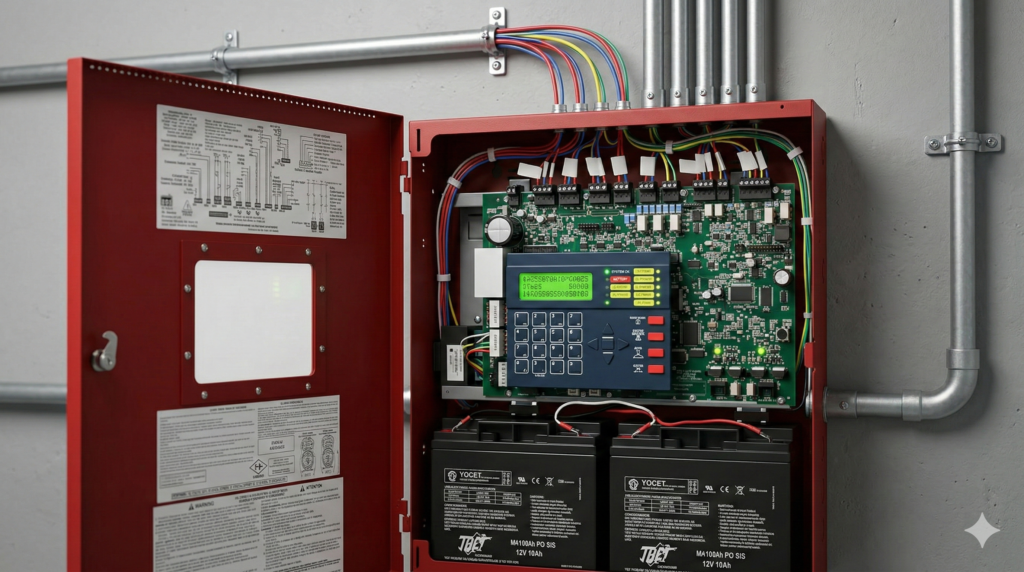
A robust fire protection strategy relies on the high-quality installation of initiating devices, such as smoke detectors and heat sensors, and notification appliances like horns and strobes. These components must be tested at specific intervals to verify they will perform as intended during an emergency.
Documentation is the bridge between physical hardware and financial protection. Detailed electronic reports of every inspection and test provide the evidence needed for insurance audits and building certifications. These records prove that the property owner has exercised due diligence in maintaining a safe environment, which can be a decisive factor in liability claims or insurance premium negotiations.
A Practical Path to Compliance
The journey toward a more efficient fire safety program begins with a comprehensive system audit. This audit evaluates the current state of the hardware, the accuracy of the zone mapping, and the reliability of the communication links to the monitoring station.
Once the baseline is established, a long-term maintenance and upgrade plan is developed. This plan prioritizes critical life-safety gaps while allowing for the gradual replacement of end-of-life hardware. By aligning system improvements with annual budget cycles, property managers can achieve a high state of readiness without sudden, unmanageable capital expenditures.
Next Steps
Meridian Alarm provides comprehensive system audits and prioritized safety planning to help you manage your facility’s risk and budget. To prepare for a review, please have your current fire alarm blueprints, your most recent inspection report, and any recent notices from the fire marshal available for our team.
Service Area: Cook, DuPage, Kane, Kendall, Lake, McHenry, Will