Modernizing Visual Monitoring: A Strategic Guide to Security Camera Installation
Implementing a professional visual monitoring system in the Greater Chicago Area / Chicagoland involves far more than simply mounting hardware. A successful installation requires a strategic evaluation of the facility’s layout, a deep understanding of network infrastructure, and a commitment to long-term reliability and compliance.
Strategic Placement and Field of View
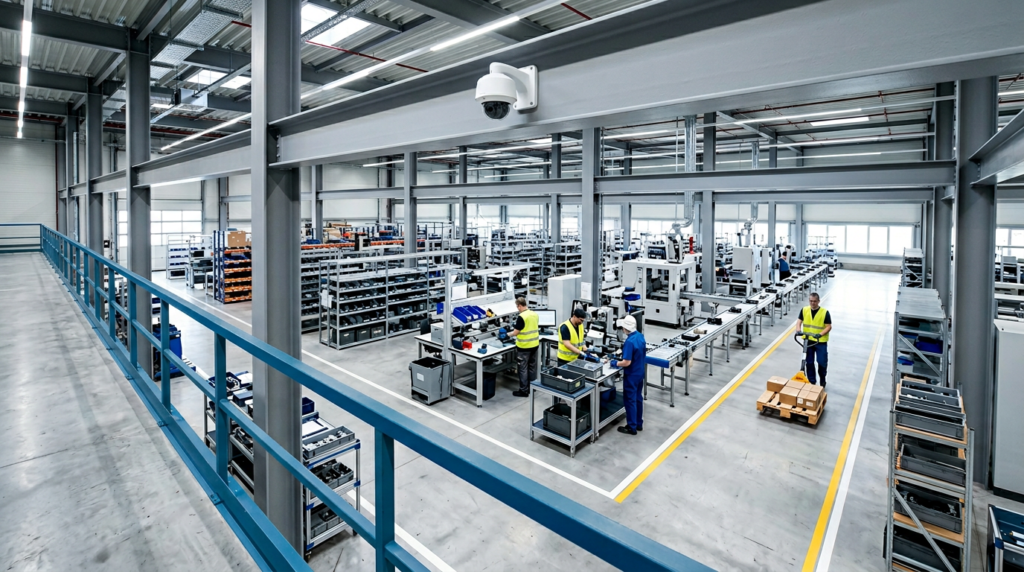
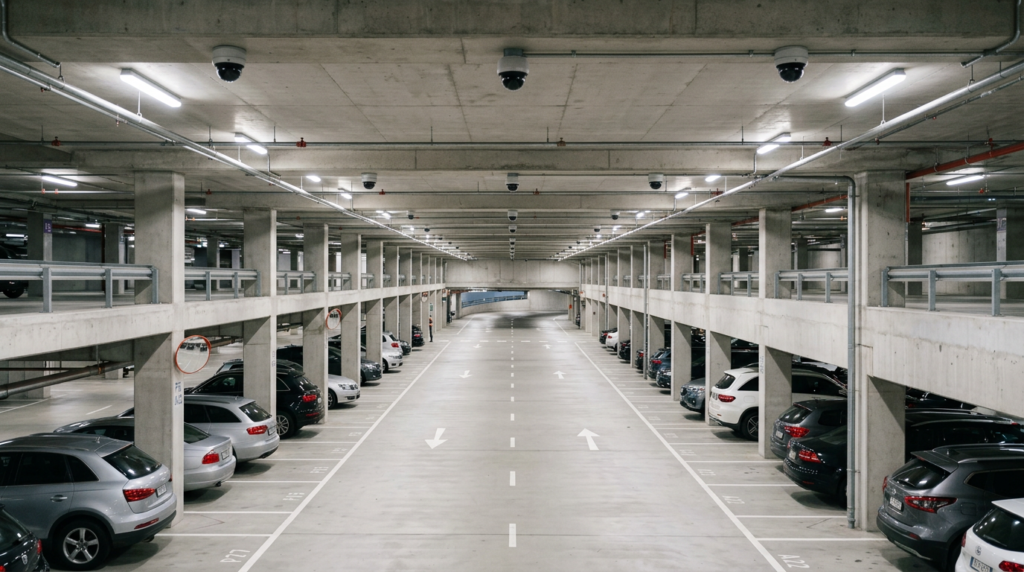
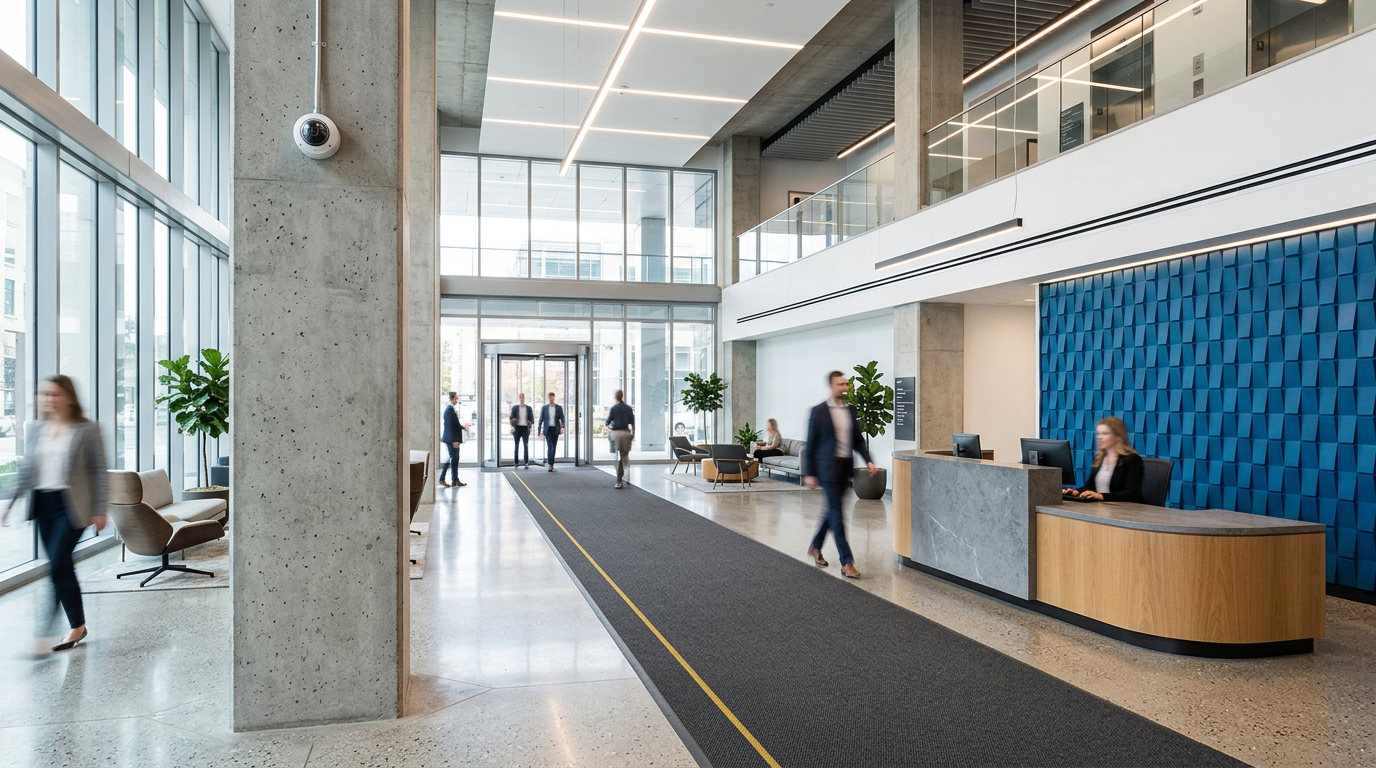
The effectiveness of any camera system is determined by its placement. The goal is to create a continuous chain of documentation across the facility’s most critical zones. This begins at the perimeter and entry points—such as lobbies, loading docks, and parking garage gates—where high-resolution sensors are required to capture forensic details like faces and license plates.
Internal placement focuses on high-traffic common areas and transition points, such as elevator lobbies and corridors. By utilizing a mix of wide-angle dome cameras for general area overviews and specialized turret cameras for specific choke points, property managers can eliminate blind spots and ensure that every movement within the building is accounted for.

Hardware, Documentation, and Testing
A professional installation utilizes enterprise-grade hardware designed for 24/7 operation. This includes high-definition IP cameras, robust network video recorders (NVRs), and specialized storage drives capable of handling continuous high-bandwidth data streams. Every device must be tested to ensure it provides the required clarity under various lighting conditions, from bright midday sun to low-light overnight hours.
Documentation is a vital component of the installation process. Property owners should be provided with a complete set of “as-built” drawings that identify the location, model, and IP address of every camera in the system. This documentation, combined with a detailed configuration report, ensures that future maintenance or system expansions can be performed efficiently without disrupting building operations.
The Foundation of Structured Cabling
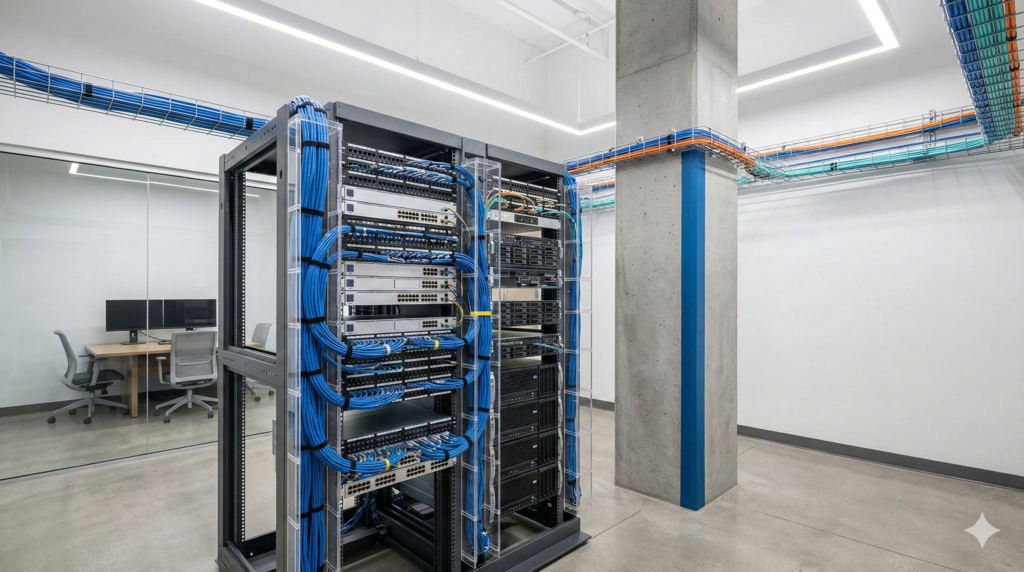
The reliability of a modern digital camera system depends entirely on the quality of its cabling foundation. Utilizing Power over Ethernet (PoE) technology allows a single Cat6 or Cat6A cable to provide both the data connection and the power to the camera. This reduces the complexity of the installation and allows for centralized power management and battery backup.
Professional cable routing is essential for maintaining signal integrity. This involves utilizing dedicated pathways, such as J-hooks or cable trays, and maintaining proper separation from high-voltage electrical lines to avoid electromagnetic interference. Every cable run must be labeled and certified to meet its rated speed, ensuring that high-resolution video streams reach the recorder without latency or packet loss.
Integration and System Commissioning
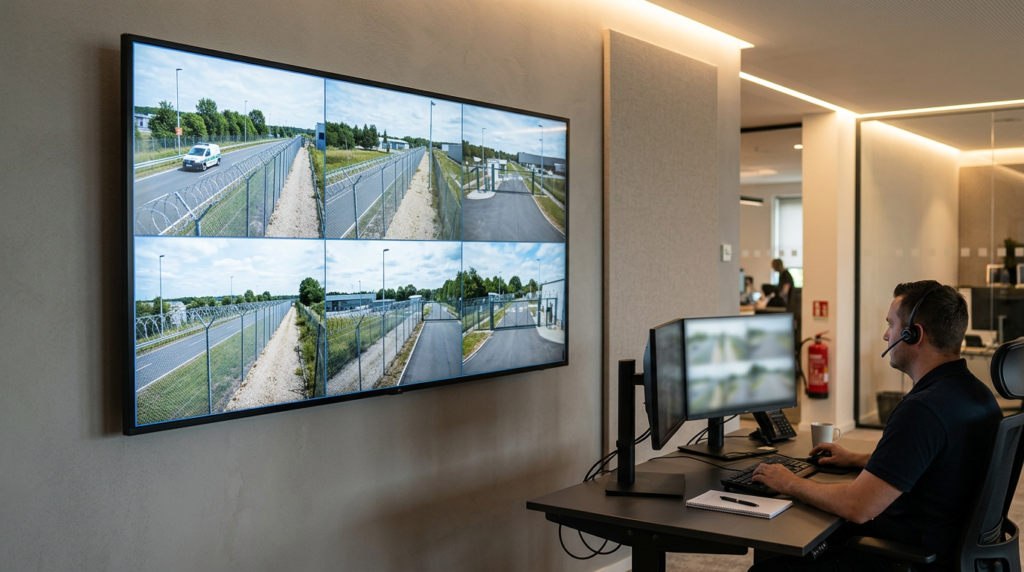
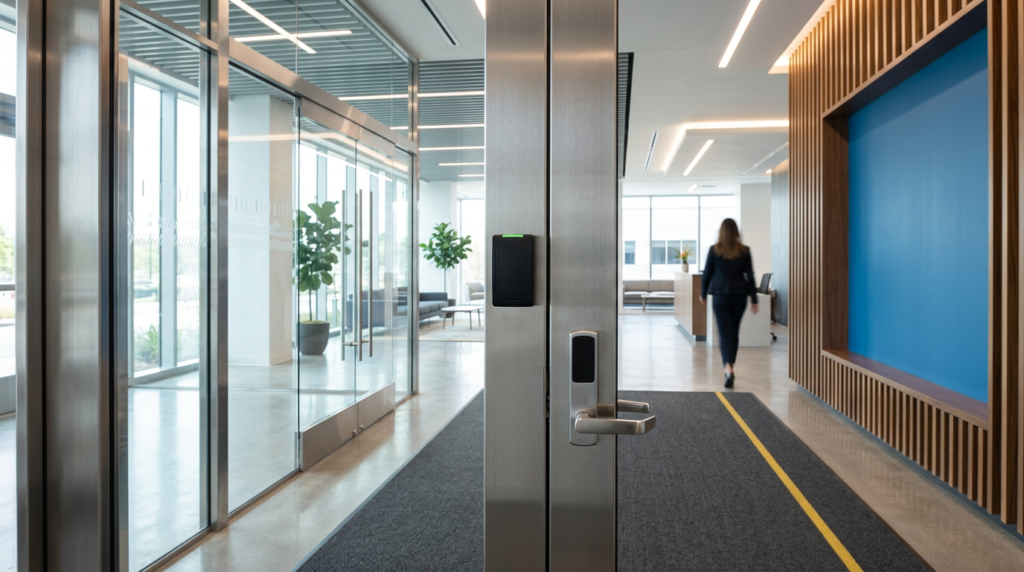
A modern visual monitoring system should not exist in a vacuum. Integration with access control and alarm systems allows for a more proactive security posture. For example, when an unauthorized entry attempt is detected at a secure door, the nearest camera can automatically be brought to the forefront of the management software, allowing for immediate visual verification.
The final commissioning phase involves a rigorous walk-through to verify that every camera’s field of view meets the original design requirements. Administrators are then trained on the video management software, including how to search for historical footage, export clips for authorities, and manage remote access permissions. This comprehensive approach ensures the system is a functional tool for the facility’s safety and management teams.
Next Steps
Meridian Alarm provides comprehensive site audits and prioritized installation plans to help secure your commercial assets. To prepare for a consultation, please have a site map, notes on specific areas of concern, and information regarding your current network infrastructure available for our team.
Service Area: Cook, DuPage, Kane, Kendall, Lake, McHenry, Will