Access Control Installation: A Comprehensive Guide for Facility Managers
Implementing a modern access control system in the Greater Chicago Area / Chicagoland requires a strategic balance between high-level security and daily operational flow. A successful installation moves beyond simply locking doors; it creates a managed environment where movement is tracked, unauthorized entry is deterred, and life-safety compliance is maintained.
Planning and Perimeter Strategy
The installation process begins with a detailed site assessment to identify every point of entry that requires monitoring. This includes primary lobby entrances, employee side-doors, loading docks, and sensitive internal areas like server rooms or executive suites. A tiered strategy is often applied, ensuring that the most critical areas have the most robust hardware and strictest permission levels.
Selecting the right hardware for each opening is critical. This involves choosing between electromagnetic locks, electric strikes, or electrified architectural hardware based on the door type and the required level of physical resistance. Every decision must be cross-referenced with local fire codes to ensure that life-safety egress is never compromised during an emergency.
Hardware, Documentation, and Testing
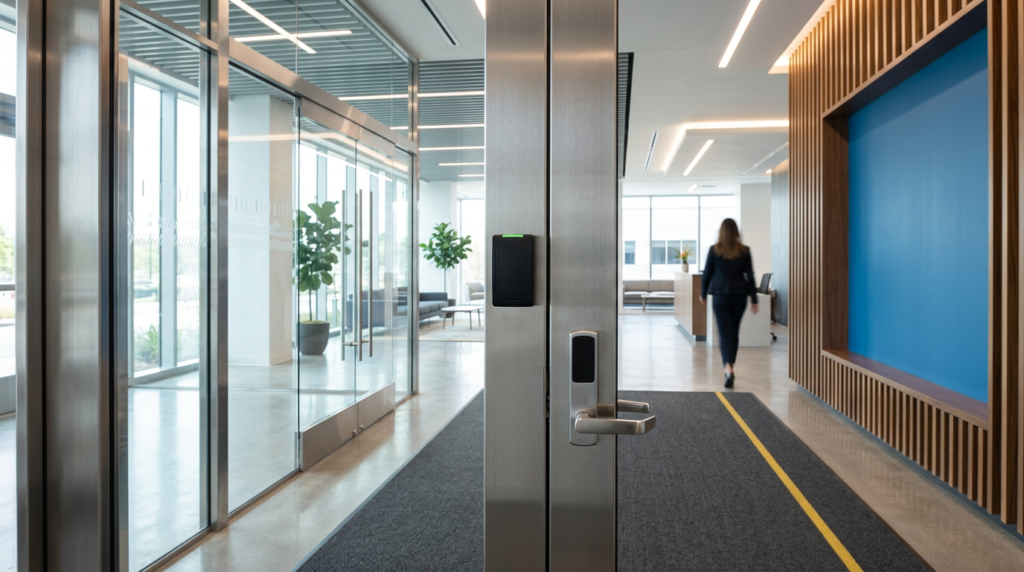
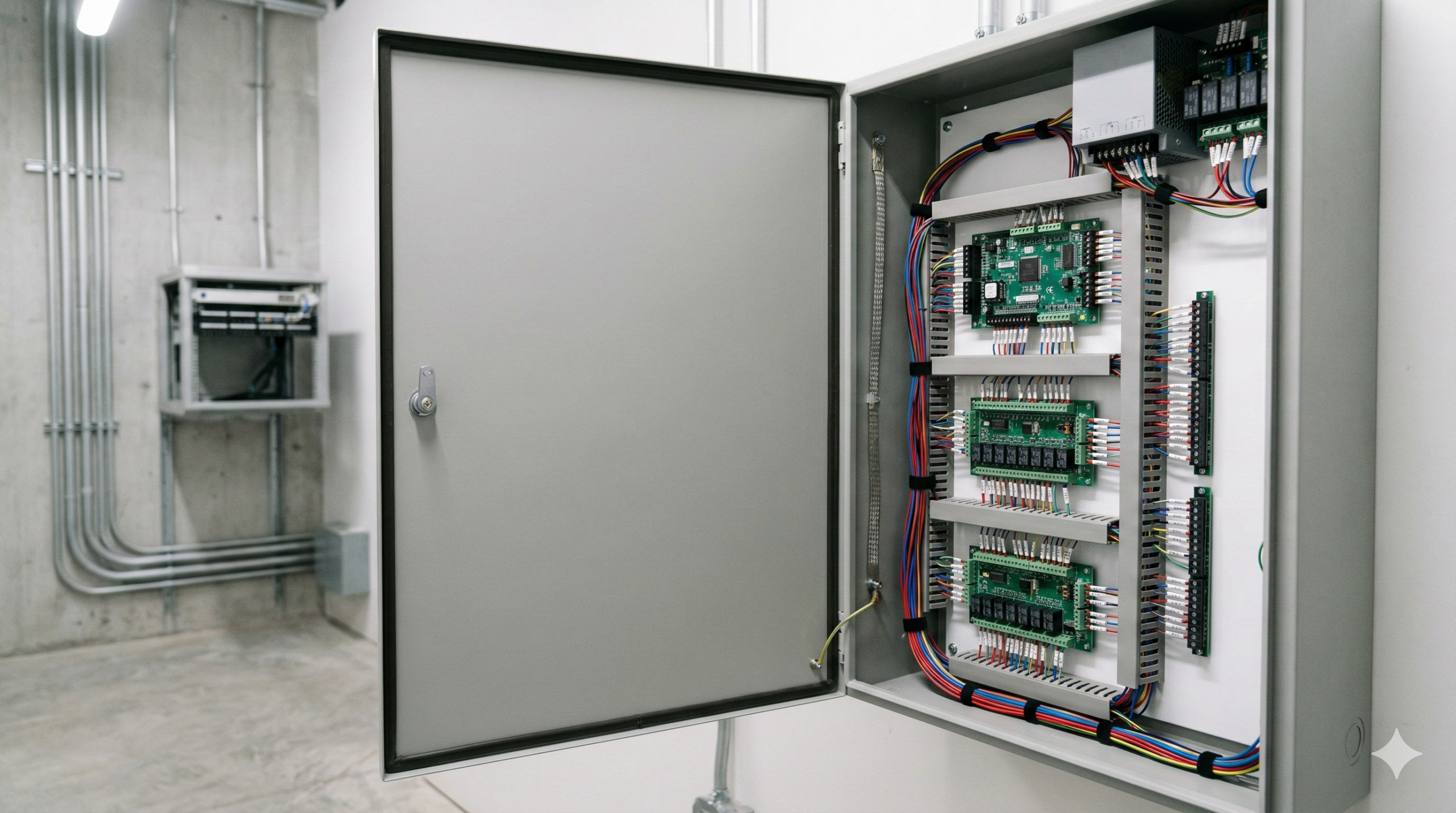
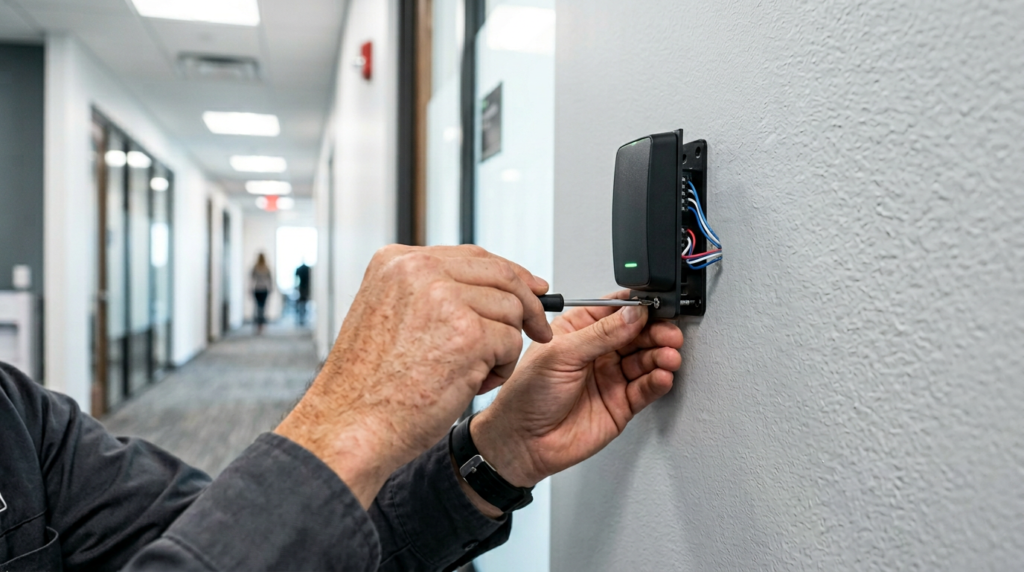
A professional installation relies on the quality of the “head-end” equipment and the field devices. This includes the central controllers that manage the database, the power supplies with battery backups, and the readers that interface with user credentials. Modern systems often utilize encrypted smart card technology or mobile-based credentials to prevent unauthorized duplication.
Documentation is the backbone of long-term system management. Property managers should receive a complete set of “as-built” drawings that map out every reader, door contact, and request-to-exit sensor. This documentation, combined with a detailed device schedule, ensures that future maintenance or system expansions can be handled efficiently without guesswork.
System Integration and Infrastructure
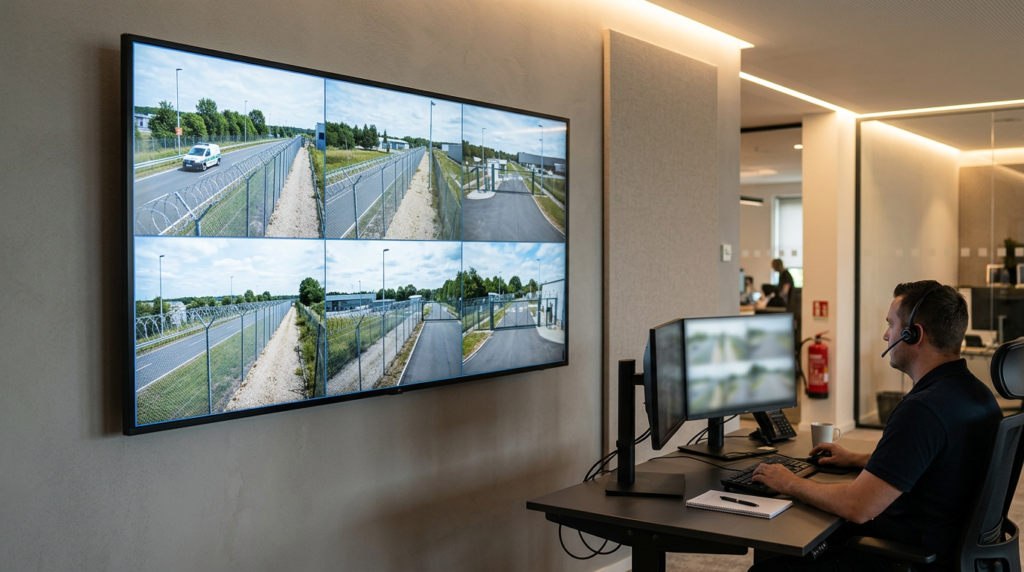
Access control performs best when integrated with other building systems. By linking the door controllers to a video management system, security personnel can receive instant visual verification when an “alarm-forced-open” event occurs. Similarly, integration with the fire alarm system ensures that designated doors automatically unlock during a fire event to allow for safe evacuation.
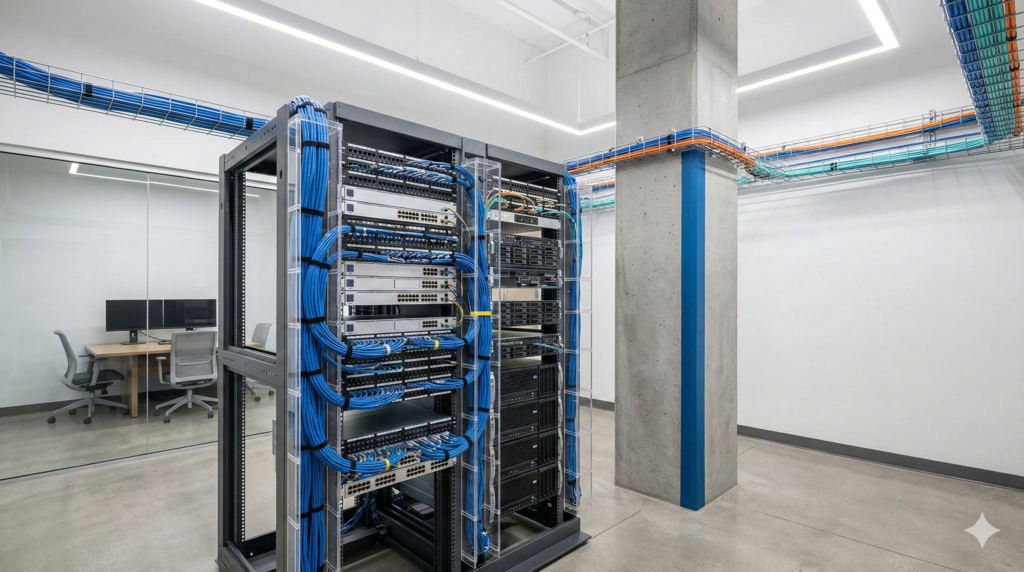
The reliability of these connections depends on professional structured cabling. Utilizing high-quality, shielded data lines and ensuring all runs are neatly organized and labeled within the equipment room prevents signal interference and simplifies troubleshooting. Following industry best practices for cable support and separation ensures the system remains operational for years to come.
Commissioning and Ongoing Management
The final stage of installation is system commissioning and user training. This involves testing every single door to verify that it locks securely, triggers the correct alerts, and integrates properly with the software database. Administrators must be trained on how to manage the user list, set time schedules for different groups, and run audit reports for liability reviews.
Ongoing management includes regular physical inspections of the door hardware to ensure mechanical parts have not shifted or worn down. Updating the system software and reviewing user permissions are also essential tasks for maintaining a secure facility. A proactive maintenance schedule helps avoid emergency service calls and ensures the building remains protected around the clock.
Next Steps
Meridian Alarm provides comprehensive system design reviews and prioritized installation plans for commercial properties. To prepare for a consultation, please have your architectural floor plans, a list of current entry points, and any specific security requirements from your insurance provider available.
Service Area: Cook, DuPage, Kane, Kendall, Lake, McHenry, Will