Structured Cabling Essentials: Navigating Cable Types for Modern Infrastructure
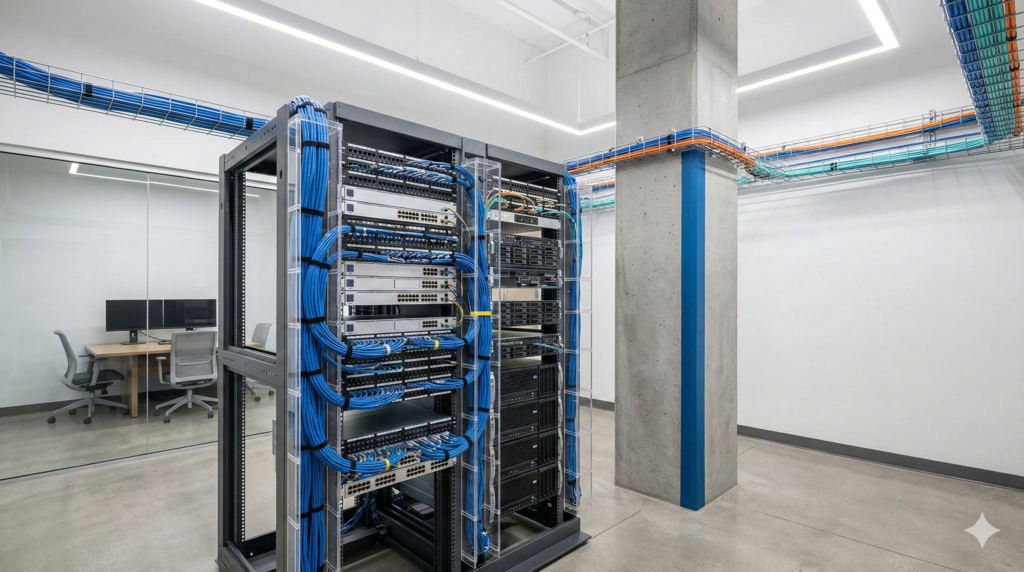
Building a reliable technology foundation in the Greater Chicago Area / Chicagoland requires a strategic approach to structured cabling. The physical wires running through your walls and ceilings are the veins of your business, carrying everything from high-speed internet and VoIP calls to security camera footage and life-safety signals.
Copper vs. Fiber Optic Solutions
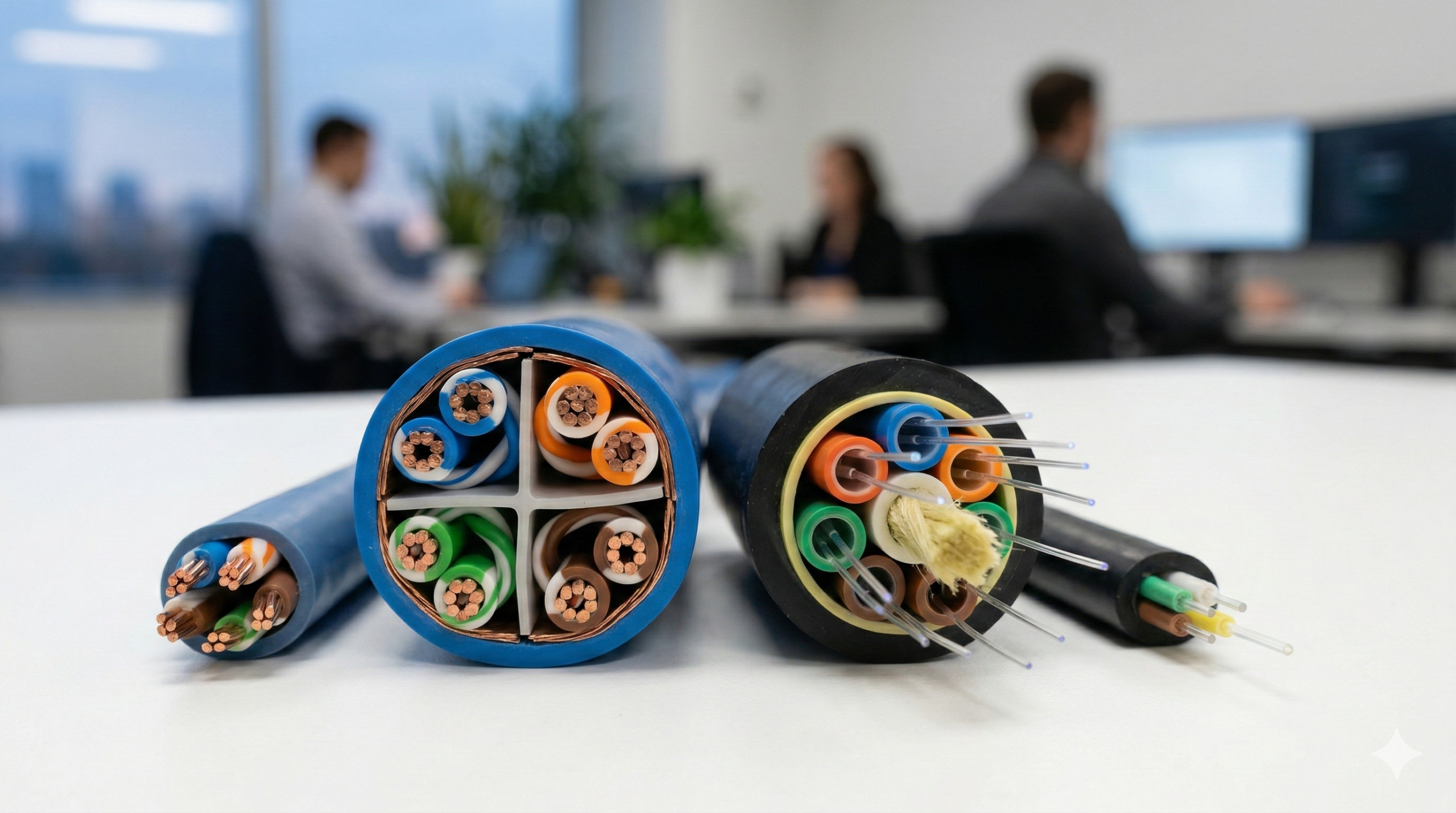
The most common choice for horizontal cabling—the runs from the equipment room to individual workstations—is twisted-pair copper. Category 6 (Cat6) and Category 6A (Cat6A) are the current standards for modern offices. While Cat6 is sufficient for standard gigabit speeds, Cat6A is designed to support 10-Gigabit speeds and provides better heat dissipation for Power over Ethernet (PoE) applications, making it a superior choice for future-proofing.
Fiber optic cabling is the primary choice for the “backbone” of a building. Because fiber uses light instead of electrical pulses, it can carry significantly more data over much longer distances without signal degradation. In large facilities or multi-story buildings, fiber connects separate telecommunications closets to a central data center, ensuring that the entire network operates at peak performance.
Capacity Planning
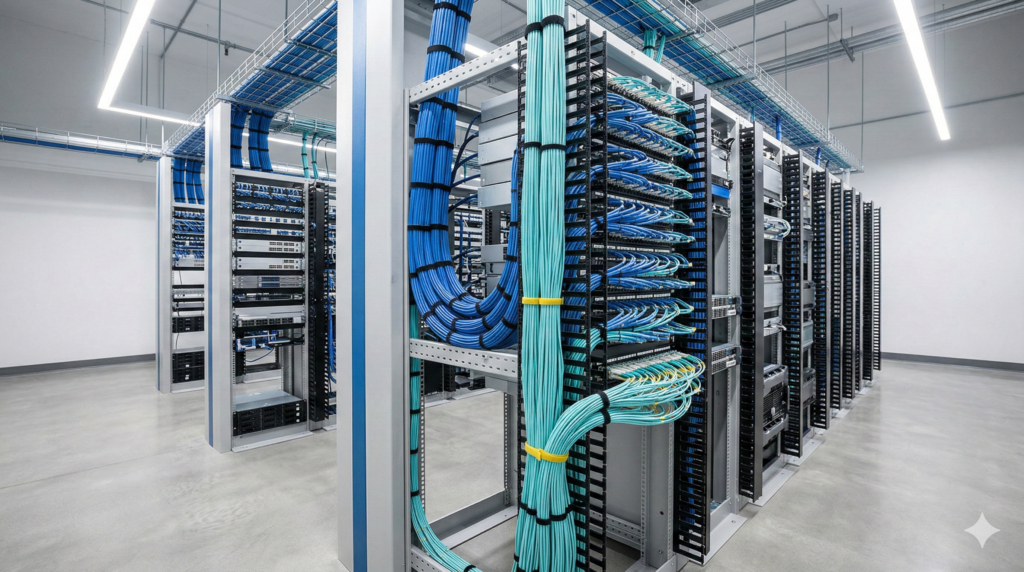
Successful infrastructure begins with a realistic assessment of both current needs and future growth. This includes calculating PoE budgets to ensure the network switches can power an increasing number of access points and security cameras.
Pathways must be designed with expansion in mind. This involves utilizing properly sized conduit and cable trays that allow for additional runs to be added without disturbing existing service. Labeling conventions are equally critical; every cable should be clearly identified at both the outlet and the patch panel to ensure that future troubleshooting or moves, adds, and changes can be performed efficiently.
Installation Quality Controls
The performance of high-speed data cabling is highly dependent on the quality of the installation. Professional integrators follow strict BICSI standards to maintain the integrity of the signal. This includes avoiding electromagnetic interference (EMI) by keeping data lines away from high-voltage power sources and fluorescent lighting ballasts.
Physical discipline during installation is also vital. Cables must never be pulled with excessive force, and the “bend radius” must be strictly respected to prevent microscopic damage to the copper or glass cores. Proper pathway support, such as J-hooks or cable trays, ensures that the weight of the cable bundles does not cause sagging or tension over time.
Certification and Turnover
The final stage of a cabling project is certification. Unlike a simple continuity test, professional certification involves using specialized equipment to measure the actual performance of every link against industry standards. This ensures that a Cat6A drop truly supports the frequency and data rates it was designed for.
Upon completion, property managers should receive a comprehensive turnover package. This includes “as-built” drawings showing the exact routing of all cables, a detailed map of all numbered drops, and the printed certification results for every run. This documentation is an invaluable asset for facility management and long-term operational stability.
Next Steps
Meridian Alarm provides comprehensive pre-wire planning reviews and written infrastructure plans for new constructions and renovations. To prepare for a consultation, please have your reflected ceiling plan, desired rack locations, and ISP handoff details available.
Service Area: Cook, DuPage, Kane, Kendall, Lake, McHenry, Will