
1080p vs. 4k: A Practical Guide for Office Facilities
In the Greater Chicago Area / Chicagoland, property managers and facility directors face a critical decision when upgrading their visual monitoring systems. Choosing between 1080p (2MP) and 4k (8MP) resolution involves balancing image clarity against the total cost of ownership, network bandwidth, and long-term storage requirements.
Core Specifications
| Feature | 1080p (2 Megapixel) | 4k (8 Megapixel) |
| Pixel Density | Standard detail for general area views | High detail for forensic identification |
| Bandwidth Impact | Low; ideal for limited network capacity | High; requires robust structured cabling |
| Storage Needs | Moderate; longer retention on smaller drives | Significant; requires high-capacity HDDs |
| Digital Zoom | Limited; images pixelate quickly when cropped | Superior; maintains clarity at higher zoom |
Where the Alternate Option Still Makes Sense
While 4k resolution offers the highest level of detail, 1080p remains a highly viable and cost-effective choice for many office applications. In environments with consistent, bright lighting and smaller footprints—such as interior private offices or small breakrooms—the additional pixels of 4k may provide diminishing returns.
Standard high-definition cameras are also preferred when the existing network infrastructure cannot be easily upgraded. Because they consume significantly less bandwidth, 1080p devices allow for more cameras to be placed on a single network switch without causing latency or dropped frames in the video management software.
Future-Proofing and Integration
For facilities looking to future-proof their investment, 4k resolution is becoming the industry standard for high-traffic entry points and large open-plan workspaces. The higher pixel count allows for “digital zooming” after an incident has occurred, enabling staff to clearly see small details like credentials or distant faces that would be blurred on a lower-resolution sensor.
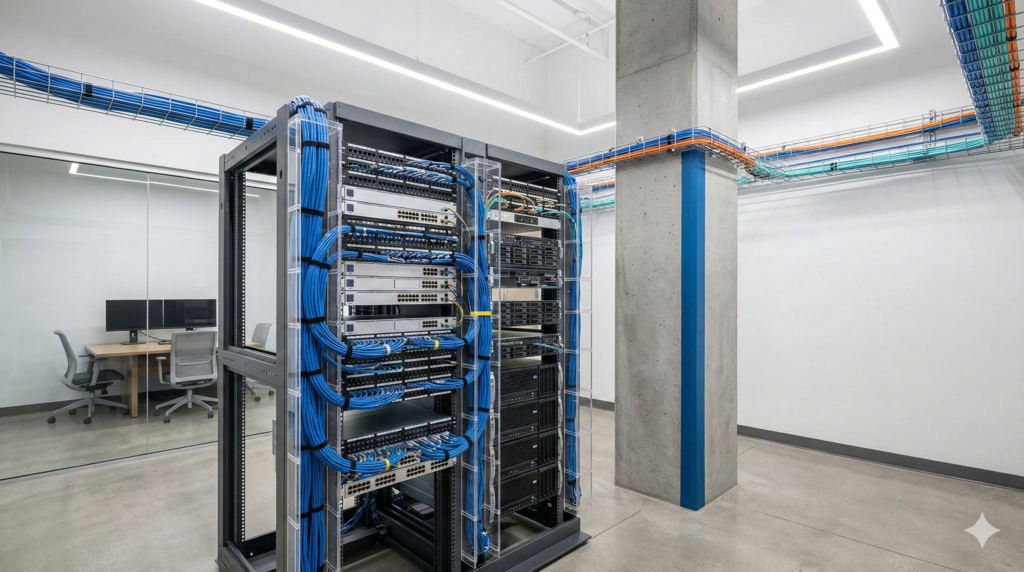
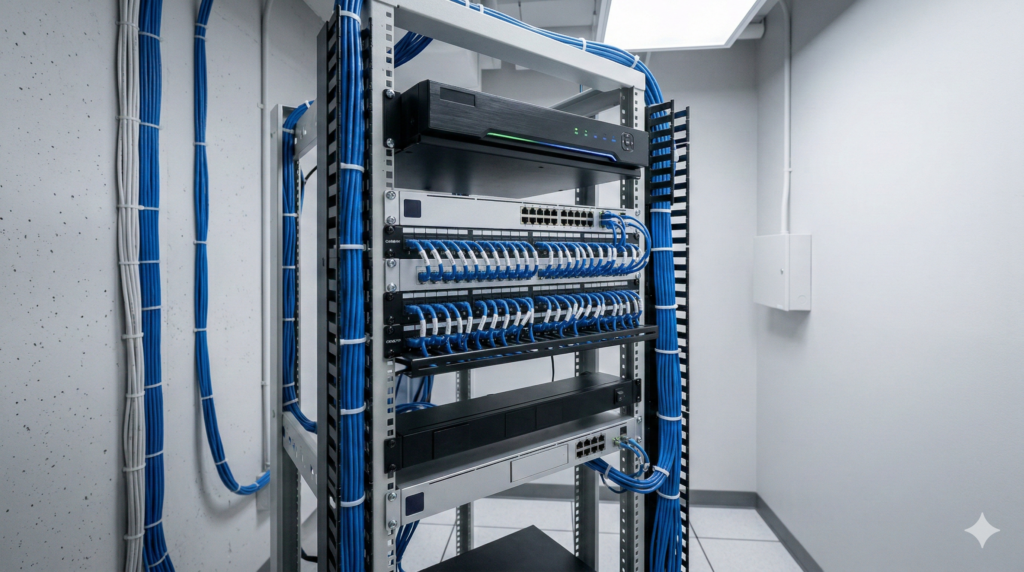
Modern video management systems are designed to handle these higher resolutions through advanced compression techniques like H.265. This technology allows for 4k streams to be managed more efficiently, though it still requires a foundation of high-quality Cat6 or Cat6A structured cabling to ensure the data reaches the recorder without bottlenecking.
Implementation Path
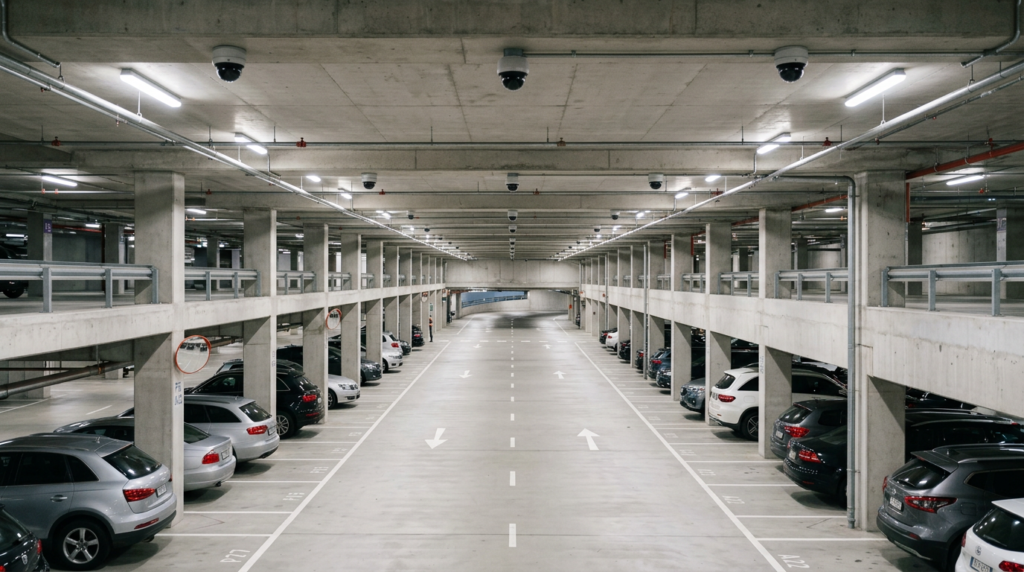
The most effective strategy for most office buildings is a hybrid deployment. This involves placing 4k cameras at critical “choke points”—such as main lobbies, loading docks, and parking garage entrances—where high detail is mandatory for security and liability protection.
Standard 1080p or 4MP cameras can then be used for general surveillance in hallways and common areas. This balanced approach maximizes the security budget by putting the highest performance where it is needed most while keeping storage costs manageable. As needs evolve, individual cameras can be upgraded to higher resolutions without requiring a complete system overhaul.
Next Steps
Meridian Alarm provides comprehensive system evaluations and written migration plans to help you transition to high-resolution monitoring. To prepare for a review, please have your current site drawings, network equipment locations, and any specific areas of concern available.
Service Area: Cook, DuPage, Kane, Kendall, Lake, McHenry, Will